Algorithms for Biological Sequencing Data
The group led by University Lecturer Leena Salmela focuses on algorithms for genome assembly.
The research area of algorithms and theory pursues fundamental research at the synthesis of algorithmic and mathematical foundations of computing, integrating a broad range of expertise including multiple areas of algorithmics, computational complexity, cryptography, distributed computing, logic, and quantum computing.








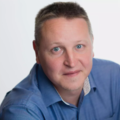



The group led by University Lecturer Leena Salmela focuses on algorithms for genome assembly.

In the Bidirectional Research in AI and Neuroscience Lab (BRAIN), we seek to understand how both humans and artificial systems treat visual scenes, with a particular attention to cases where humans are more robust than AI

The C-BRAHMS research group aims at designing and developing efficient methods for computational musicology problems. In particular, it focuses on three computational musicology areas: 1) music pattern matching and detection, 2) automated music generation with the help of human computer interaction, and 3) score following with the help of the first area of this project, optical music recognition and audio transcription. The project develops cutting edge technology and algorithms to these areas and aim to make significant strides in these intertwined fields. Our initiative stands at the intersection of advanced computer science and the legacy of musicology, music composition and performance. It aims to push the boundaries on how music is created, engineered, and interacted with in the future.

The Constraint Reasoning and Optimization group, led by Professor Matti Järvisalo
Opens in a new tab
, develops, analyzes and applies practical algorithmic approaches to trustworthy automated reasoning and constraint optimization for efficiently solving computationally “intractable” (NP-complete or presumably harder) real-world problems. Contributions range from complexity analysis and algorithm design to open-source implementations of automated reasoning and constraint optimization solvers, as well as domain-specific applications in e.g. explainability, computational social choice, argumentation, and machine learning.

In the Aalto crypto group, we work on a wide range of cryptography research areas, including foundations, protocol analysis, side-channel analysis, lattice-based cryptography, zero-knowledge and succinct argument systems, and privacy enhancing technologies. The effort is led by Chris Brzuska and Russell W. F. Lai.

Our current research focuses on the foundations of distributed and parallel computing.
One of our key research questions is locality in the context large computer networks. There are many computational tasks that are of a global nature: to solve such a task, it is necessary to transfer information over a long distance, from one side of the network to another. However, there are also tasks that are of a local nature: it is sufficient for each network device to gather information from its own local neighborhood. We aim at understanding which computational tasks are local and which are global.

The Exploratory Data Analysis group, led by Associate Professor Kai Puolamäki, is located at the Department of Computer Science and Institute for Atmospheric and Earth System Research (INAR) at the University of Helsinki. We work at the intersection of computer science and natural sciences. We study and develop machine learning models of measured and simulated natural world phenomena. Our objective is to find ways for scientists and others to understand data and the underlying processes - and to build better models of nature.

The research group works on various themes related to Internet, and mobile and fixed networking.
My group works on inductive logic programming (ILP), a form of relational machine learning that learns logical rules from examples and background knowledge. We develop the ILP system Popper.

The group's current mission is to implement the vision by studying: algorithm theory of computing sums of products, sums of products in computational statistics, applications in science and technology.

The Trustworthy Machine Learning group studies machine learning and artificial intelligence (AI) that we could trust with sensitive data and critical applications.
Our main foci are privacy-preserving machine learning and handling uncertainty, although we consider other aspects of trustworthy AI as well.
The complex systems computation group (CoSCo) investigates computational problems related to complex systems, focusing on prediction and modelling. Working at the intersection of computer science, information theory and mathematical statistics, the group carries out both basic research and applied research, solving problems in the fields of social sciences, ecology and medicine.

The group seeks to understand, model, and program naturally occurring or nature-inspired self-organising processes. The current main focus is on DNA and RNA self-assembly, but related areas of interest are e.g. algorithms for swarm robotics and programmable matter, control of distributed sensor networks, and stochastic optimisation methods for complex energy landscapes.

Our research is focused on graph algorithms, from both a theoretical perspective, and a practical perspective motivated by real-world problems in Bioinformatics, such as genome sequencing technologies.
We also study related algorithmic topics, such as combinatorial optimization, enumeration algorithms, string algorithms. Our main application area is Bioinformatics, where we work on various assembly problems of high-throughput sequencing data, pan-genomics, protein evolution.