Funded researchers

Funded researchers

Current HIIT Researchers

HIIT provides funding for two types of researchers: Postdoctoral Researchers and Research Fellows.

HIIT Postdoctoral Fellow positions are intended for researchers who have recently completed their doctoral degrees. HIIT Postdoctoral Fellows are not hired to work on externally funded projects, but are intended to support one or more of the HIIT strategic focus areas. These positions provide opportunities for development as a researcher within a research group from one of the four departments conducting ICT research in Aalto University and University of Helsinki.

The contract period is normally up to three years.

HIIT Research Fellow positions support the career development of excellent advanced researchers who already have some postdoctoral research experience. While HIIT Research Fellows have a designated supervisor at University of Helsinki or Aalto, they are expected to develop their own research agenda and to gain the skills necessary to lead their own research group in the future. HIIT Research Fellows should strengthen Helsinki’s ICT research community either through collaboration or by linking ICT research with another scientific discipline. In either case, excellence and potential for impact are the primary criteria for HIIT Research Fellow funding.

The contract period is normally for five years.

Please find presentations of the HIIT Postdoctoral Fellows and HIIT Research Fellows below. For presentations of former HIIT Postdoctoral fellows and HIIT Research Fellows, please click here.
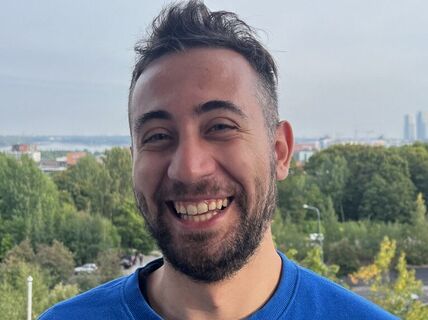
Florian Adriaens
Florian Adriaens

Florian Adriaens

HIIT Postdoctoral Fellow 1.1.2023-31.12.2025

Research Portal
Google Scholar

Florian Adriaens received his PhD degree in 2020 at Ghent University as a member of the Artificial Intelligence & Data Analytics Group led by Prof. Tijl De Bie, and co-supervised by Prof. Jefrey Lijffijt. After graduating he worked for two years as a postdoctoral researcher in KTH University in the data mining group of Prof. Aristides Gionis. Since January 2023 Florian started working as a HIIT postdoctoral fellow under the supervision of Prof. Nikolaj Tatti.

His broad research interests include graph algorithms, social-network analysis and graph mining. His current research is focused on algorithm design for computational problems related to polarization and distance reduction in social networks.

Sample of recent publications:

[1] Iiro Kumpulainen, Florian Adriaens, and Nikolaj Tatti. 2024. Max-Min Diversification with Asymmetric Distances. In Proceedings of the 30th ACM SIGKDD Conference on Knowledge Discovery and Data Mining (KDD ’24). Association for Computing Machinery, New York, NY, USA, 1440–1450.

[2] Florian Adriaens, Honglian Wang, and Aristides Gionis. 2023. Minimizing Hitting Time between Disparate Groups with Shortcut Edges. In Proceedings of the 29th ACM SIGKDD Conference on Knowledge Discovery and Data Mining (KDD ’23). Association for Computing Machinery, New York, NY, USA, 1–10.

[3] Florian Adriaens and Simon Apers. 2023. Testing Cluster Properties of Signed Graphs. In Proceedings of the ACM Web Conference 2023 (WWW ’23). Association for Computing Machinery, New York, NY, USA, 49–59.

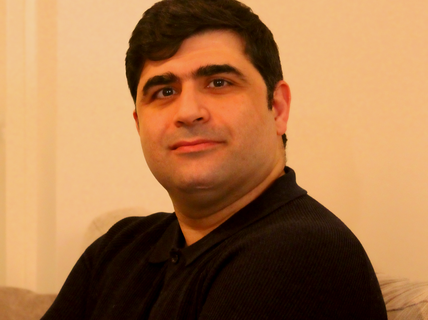
Nadia Ady
Nadia Ady

Nadia Ady

HIIT Postdoctoral Fellow 15.8.2023-17.2.2027 

Research Portal
Google Scholar

Nadia Ady (she/they) is an artificial intelligence researcher who is particularly excited about the possibilities for imbuing machines with traits of creativity and curiosity. Her recent work has aimed to help us achieve the benefits of specific curiosity in machine learners, better understand the landscape of intrinsically motivated learning algorithms, and explore the implications of translating concepts (like curiosity and creativity) from human psychology into artificial intelligence. Nadia completed a Ph.D. at the University of Alberta in 2023, working in the Reinforcement Learning and Artificial Intelligence Lab under the supervision of Patrick M. Pilarski. She is now working in the Autotelic Interaction Research Group at Aalto Computer Science, led by Christian Guckelsberger. Nadia is keen to explore the HIIT community for engaging discussions and future collaborations.

Sample of publications:

[1] Joonas Lahikainen, Nadia M. Ady, Christian Guckelsberger. 2024. Creativity and Markov Decision Processes. Creativity and Markov Decision Processes. In K. Grace, M. T. Llano, P. Martins, & M. Hedblom (Eds.), Proceedings of the 15th International Conference on Computational Creativity (ICCC 2024) Association for Computational Creativity.

[2] E. Lintunen, N. Ady, & C. Guckelsberger. 2024. Diversity Progress for Goal Selection in Discriminability-Motivated RL. Paper presented at International Workshop on Intrinsically Motivated Open-ended Learning, Vancouver, British Columbia, Canada.

[3] M. Laattala, R. Piitulainen, N. Ady, M. Tamariz, & P. Hämäläinen. 2024. WAVE : Anticipatory Movement Visualization for VR Dancing. In F. F. Mueller, P. Kyburz, J. R. Williamson, C. Sas, M. L. Wilson, P. Toups Dugas, & I. Shklovski (Eds.), CHI ’24: Proceedings of the 2024 CHI Conference on Human Factors in Computing Systems (pp. 1–9). Article 720 ACM.

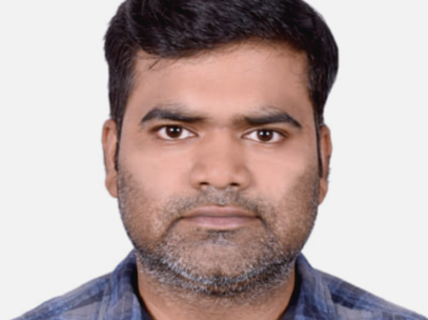
Jarno Alanko
Jarno Alanko

Jarno Alanko

HIIT Postdoctoral Fellow 1.2.2023-31.12.2025

Research Portal
Google Scholar

Jarno Alanko received his PhD in 2020 at the University of Helsinki under the supervision of Veli Mäkinen. During 2020-2022, he worked as a post-doctoral researcher with professor Travis Gagie at Dalhousie University and professor Keijo Heljanko at the University of Helsinki.

Alanko’s work focuses on compact data structures for bioinformatics applications. Research highlights include the generalization of the concept of tunneling to Wheeler graphs, an optimal solution to the repeat-free minimum spectrum-preserving string set problem, and introduction of the concept of the Spectral Burrows-Wheeler transform for succinct indexing of k-mer spectra.

Alanko is also the lead developer in the Themisto project  to build pseudoalignment index structures scalable to hundreds of thousands of bacterial genomes. The Themisto pseudoaligner has been used to develop bacterial genomic epidemiology with mixed samples and to study the pathogen competition in neonatal gut colonisation.

Sample of publications

[1] Jarno N. Alanko, Davide Cenzato, Nicola Cotumaccio, Sung-Hwan Kim, Giovanni Manzini, and Nicola Prezza. 2024. Computing the LCP Array of a Labeled Graph. In 35th Annual Symposium on Combinatorial Pattern Matching (CPM 2024). Leibniz International Proceedings in Informatics (LIPIcs), Volume 296, pp. 1:1-1:15, Schloss Dagstuhl – Leibniz-Zentrum für Informatik.

[2] Mohammadali Serajian, Simone Marini, Jarno N Alanko, Noelle R Noyes, Mattia Prosperi, Christina Boucher. 2024. Scalable de novo classification of antibiotic resistance of Mycobacterium tuberculosis, Bioinformatics, Volume 40, Issue Supplement_1, Pages i39–i47.

[3] M. Equi, T. Norri, J. Alanko, et al. 2023. Algorithms and Complexity on Indexing Founder Graphs. Algorithmica 85, 1586–1623 (2023).

Melissa Antonelli picture
Melissa Antonelli

Melissa Antonelli

HIIT Postdoctoral Fellow 1.4.2023-31.3.2026

Melissa received her Ph.D. in Computer Science and Engineering in 2023 at the University of Bologna, where she was part of the FOCUS group. Her doctoral research focused on logical foundations of randomised computation and was supervised by Ugo Dal Lago and co-supervised by Paolo Pistone. She currently works as a post-doctoral researcher at HIIT, in the focus area Foundations of Computing.

Broadly speaking, Melissa’s research concerns interactions between logic and theoretical computer science, with a special attention to proof theory, modal logic and computational complexity theory. At the moment, she is working on the (logical and implicit) characterizations of probabilistic and circuit complexity classes. Her research is supervised by Mikko Koivisto and Juha Kontinen, and is conducted in collaboration with Arnaud Durand.

Sample of publications

[1] Melissa Antonelli, Ugo Dal Lago, Paolo Pistone. Towards logical foundations for probabilistic computation, Annals of Pure and Applied Logic, Volume 175, Issue 9, 2024,103341.

[2] Melissa Antonelli, Ugo Dal Lago, Davide Davoli, Isabel Oitavem, and Paolo Pistone. Enumerating Error Bounded Polytime Algorithms Through Arithmetical Theories. In 32nd EACSL Annual Conference on Computer Science Logic (CSL 2024). Leibniz International Proceedings in Informatics (LIPIcs), Volume 288, pp. 10:1-10:19, Schloss Dagstuhl – Leibniz-Zentrum für Informatik (2024)

[3] Melissa Antonelli, Arnaud Durand, and Juha Kontinen. A New Characterization of FAC⁰ via Discrete Ordinary Differential Equations. In 49th International Symposium on Mathematical Foundations of Computer Science (MFCS 2024). Leibniz International Proceedings in Informatics (LIPIcs), Volume 306, pp. 10:1-10:18, Schloss Dagstuhl – Leibniz-Zentrum für Informatik (2024).

Manuel Caceres picture
Manuel Caceres

Manuel Caceres

HIIT Postdoctoral Fellow 1.2.2024-31.1.2027

Research Portal

Google Scholar

Website

Manuel Caceres obtained a MSc. in Computer Science under the supervision of Prof. Gonzalo Navarro in University of Chile, in 2019. Later, in 2023, he received a PhD. in Computer Science under the supervision of Prof. Alexandru I. Tomescu in University of Helsinki. During 2023 he worked as a Postdoctoral Researcher in the group Graph Algorithms of University of Helsinki. Manuel currently works as a HIIT Postdoctoral Fellow in the group of Prof.Sándor Kisfaludi‑Bakin the group Computational Geometry.

Manuel’s main research interests are on Graph and String Algorithms and Data Structures, with a focus on fast algorithms for polynomially solvable problems as well as on problems with applications to bioinformatics. Some of his research highlights are  a parameterized linear time algorithm for the problem of string matching to labeled graphs, the first parameterized linear time algorithm for computing a minimum path cover, as well as the first almost linear time solution for minimum chain cover.

Sample of publications

[1] N. Rizzo, M. Cáceres, & V. Mäkinen. Finding maximal exact matches in graphs. Algorithms Mol Biol 19, 10 (2024).

[2] Manuel Cáceres, Brendan Mumey, Santeri Toivonen, and Alexandru I. Tomescu. Practical Minimum Path Cover. In 22nd International Symposium on Experimental Algorithms (SEA 2024). Leibniz International Proceedings in Informatics (LIPIcs), Volume 301, pp. 3:1-3:19, Schloss Dagstuhl – Leibniz-Zentrum für Informatik (2024)

[3] Manuel Cáceres, Massimo Cairo, Andreas Grigorjew, Shahbaz Khan, Brendan Mumey, Romeo Rizzi, Alexandru I. Tomescu, and Lucia Williams. 2024. Width Helps and Hinders Splitting Flows. ACM Trans. Algorithms 20, 2, Article 13 (April 2024), 20 pages.

Nicola Cotumaccio picture
Nicola Cotumaccio

Nicola Cotumaccio

HIIT Postdoctoral Fellow 1.2.2024-31.1.2027

Nicola Cotumaccio is a HIIT researcher at University of Helsinki as part of the Genome-scale Algorithmics group under the supervision of Professor Veli Mäkinen. He was a joint PhD student at Gran Sasso Science Institute (L’Aquila, Italy) and Dalhousie University (Halifax, Canada) under the supervision of Travis Gagie (Dalhousie University), Nicola Prezza (Ca’ Foscari University of Venice) and Catia Trubiani (Gran Sasso Science Institute). He graduated in 2024.  Nicola’s research focuses on the intersection between data compression and automata theory, focusing on pattern matching, graph algorithms and regular languages.

Sample of publications

[1] Nicola Cotumaccio. A Myhill-Nerode Theorem for Generalized Automata, with Applications to Pattern Matching and Compression. STACS 2024.

[2] Nicola Cotumaccio. Prefix Sorting DFAs: a Recursive Algorithm, ISAAC 2023.

[3] Nicola Cotumaccio, Giovanna D’Agostino, Alberto Policriti, Nicola Prezza. Co-lexicographically Ordering Automata and Regular Languages – Part I. Journal of the ACM, 2023.

Masood Rankooh picture
Masood Feyzbakhsh Rankooh

Masood Feyzbakhsh Rankooh

HIIT Postdoctoral Fellow 1.1.2025-31.12.2027

Research Portal

Masood Feyzbakhsh Rankooh earned his Ph.D. in Computer Engineering (Artificial Intelligence) from Sharif University of Technology, where he focused on automated reasoning, satisfiability checking, and heuristic search. After his doctoral studies, he worked as a Postdoctoral Researcher at Aalto University (2019–2022) under the supervision of Prof. Jussi Rintanen, contributing to research on SAT‐based planning and encoding methods. He then completed a Postdoctoral Fellowship at Tampere University (2022–2024) under the guidance of Prof. Tomi Janhunen, further exploring topics in logic programming and explainable AI.

His research centers on developing algorithmic approaches aimed at enhancing the efficiency and reliability of intelligent systems. A selection of his recent publications includes:

[1] Masood Feyzbakhsh Rankooh and Tomi Janhunen, “Capturing (Optimal) Relaxed Plans with Stable and Supported Models of Logic Programs,” Theory and Practice of Logic Programming, 2023 (Best Paper Award at ICLP 2023).

[2] Masood Feyzbakhsh Rankooh and Tomi Janhunen, “Improved Encodings of Acyclicity for Translating Answer Set Programming into Integer Programming,” IJCAI 2024.

[3] Masood Feyzbakhsh Rankooh and Jussi Rintanen, “Propositional Encodings of Acyclicity and Reachability by Using Vertex Elimination,” AAAI 2022.

Katsiaryna Haitsiukevich picture
Katsiaryna Haitsiukevich

Katsiaryna Haitsiukevich

HIIT Postdoctoral Fellow 1.12.2024-30.11.2026

Google Scholar

Website

Research Portal

Katsiaryna’s research focuses on physics-informed deep learning, integrating machine learning with prior knowledge of physical systems. Her work aims to develop more sample-efficient and interpretable models of physical systems, enabling latest advances in deep learning for applications in science and engineering.

Katsiaryna did her doctoral studies at Aalto University School of Science supervised by Prof. Pekka Marttinen and advised by Dr. Alexander Ilin. Currently she is a researcher at Exploratory Data Analysis group at University of Helsinki, led by Prof. Kai Puolamäki.

Selected publications:

[1] Katsiaryna Haitsiukevich, Alexander Ilin. Improved Training of Physics-Informed Neural Networks with Model Ensembles. In 2023 International Joint Conference on Neural Networks (IJCNN), Gold Coast, Australia, pp. 1–8, June 2023. Link: https://ieeexplore.ieee.org/document/10191822

[2] Katsiaryna Haitsiukevich, Onur Poyraz, Pekka Marttinen, Alexander Ilin. Diffusion models as probabilistic neural operators for recovering unobserved states of dynamical systems. In IEEE International Workshop on Machine Learning for Signal Processing (MLSP), London, United Kingdom, September 2024. Link: https://ieeexplore.ieee.org/document/10734762

[3] Katsiaryna Haitsiukevich, Samuli Bergman, Cesar de Araujo Filho, Francesco Corona, Alexander Ilin. A Grid-Structured Model of Tubular
Reactors. In 2021 IEEE 19th International Conference on Industrial Informatics (INDIN), Palma de Mallorca, Spain, pp. 1–6, July 2021. Link: https://ieeexplore.ieee.org/document/9557382

Tuomas Hakoniemi picture
Tuomas Hakoniemi

Tuomas Hakoniemi

HIIT Postdoctoral Fellow 1.6.2023-31.5.2026

Research Portal

Tuomas Hakoniemi received his PhD in 2022 from Universitat Politècnica de Catalunya under the spervision of Prof. Albert Atserias. After graduation he worked as a postdoctoral researcher in the research group of Prof. Iddo Tzameret at Imperial College London. Since June 2023 Hakoniemi has worked as a HIIT postdoctoral fellow at the University of Helsinki under the supervision of Prof. Mikko Koivisto.

Hakoniemi’s research interests lie in the intersection of theoretical computer science and mathematical logic. He is interested in the limits of models of computation and methods of reasoning and the interplay between the two. Much of his work has focused on the proof complexity of various algebraic proof systems.

Sample of publications:

1] Tuomas Hakoniemi, Nutan Limaye, and Iddo Tzameret. 2024. Functional Lower Bounds in Algebraic Proofs: Symmetry, Lifting, and Barriers. In Proceedings of the 56th Annual ACM Symposium on Theory of Computing (STOC 2024). Association for Computing Machinery, New York, NY, USA, 1396–1404.

[2]  N. Govindasamy, T. Hakoniemi, & I. Tzameret. (2022). Simple Hard Instances for Low-Depth Algebraic Proofs. In Proceedings – 2022 IEEE 63rd Annual Symposium on Foundations of Computer Science, FOCS 2022 (pp. 188-199). IEEE Computer Society.

[3] T. Hakoniemi. Monomial size vs. Bit-complexity in Sums-of-Squares and Polynomial Calculus. 2021 36th Annual ACM/IEEE Symposium on Logic in Computer Science (LICS), Rome, Italy, 2021, pp. 1-7.

Juho Hirvonen picture
Juho Hirvonen

Juho Hirvonen

HIIT Research Fellow 1.9.2022-31.8.2027

Research Portal

Juho Hirvonen received his doctorate from Aalto University in 2016, after which he was a postdoctoral researcher at the IRIF research institute at the University Paris Diderot, and the University of Freiburg. He was an Academy of Finland Postdoctoral Researcher, and is currently an HIIT Research Fellow at Aalto University.

His current research is about building an interdisciplinary connection between distributed computing and game theory: How hardness of distributed computation limits strategic behaviour, and how distributed algorithms can be used as building blocks in mechanism design. Dr. Hirvonen’s previous research has been about the theory of distributed computing, and in particular impossibility results: For example, their team received the best paper award at the IEEE Symposium on Foundations of Computing in 2019 for proving new impossibility results for maximal matching and maximal independent set.

Recent publications and manuscripts:

Juho Hirvonen, Laura Schmid, Krishnendu Chatterjee, and Stefan Schmid: Classifying Convergence Complexity of Nash Equilibria in Graphical Games Using Distributed Computing Theory. Submitted for publication. https://arxiv.org/abs/2102.13457

In this work we show that Nash equilibria of graphical games (games on networks) as computational problems are studied in distributed computing. We use this connection to analyse various graphical games, implying different convergence behaviour among them.

Alkida Balliu, Sebastian Brandt, Juho Hirvonen, Dennis Olivetti, Mikaël Rabie, Jukka Suomela: Lower Bounds for Maximal Matchings and Maximal Independent Sets. J. ACM 68(5), 2021.

Alkida Balliu, Sebastian Brandt, Juho Hirvonen, Dennis Olivetti, Mikaël Rabie, Jukka Suomela: Lower Bounds for Maximal Matchings and Maximal Independent Sets. FOCS 2019. (Best paper award).

We show that the locality (measure of how far information has to travel in a distributed system in order to solve a given problem) of maximal matching (and maximal independent set) is Omega(Delta), where Delta is the maximum degree of the input network. This is tight: it matches the locality of existing algorithms. We use the so-called round elimination technique that we have developed to prove this.

Alkida Balliu, Juho Hirvonen, Darya Melnyk, Dennis Olivetti, Joel Rybicki, Jukka Suomela: Local Mending. SIROCCO 2022.

We establish a locality measure for the hardness of mending a partial solution. We study the complexity landscape of this measure: how hard mending can be and how is it related to the hardness of solving the corresponding problem from scratch in the distributed setting.

Tuomo Lehtonen
Tuomo Lehtonen

Tuomo Lehtonen

HIIT Postdoctoral Fellow 1.1.2024-31.12.2026

Research Portal
Google scholar
Website

Tuomo Lehtonen is an artificial intelligence researcher currently working at Aalto University under the supervision of Professor Jussi Rintanen. He earned his PhD in Computer Science from the University of Helsinki in 2023, working in the Constraint Reasoning and Optimization group at the University of Helsinki.

Tuomo is interested in artificial intelligence, knowledge representation and reasoning, and algorithms for important and computationally hard (especially combinatorial) problems. His doctoral research focused on leveraging modern constraint solving techniques for computational argumentation. Currently he is broadening his efforts to other problems in artificial intelligence, with the aim of advancing the capabilities and efficiency of transparent and verifiable reasoning systems.

Sample of publications:

[1] Daphne Odekerken, Tuomo Lehtonen, Johannes P. Wallner, Matti Järvisalo. Argumentative Reasoning in ASPIC+ under Incomplete Information. Journal of Artificial Intelligence Research (83), 2025 https://doi.org/10.1613/jair.1.18404 

[2] Tuomo Lehtonen, Daphne Odekerken, Johannes P. Wallner, Matti Järvisalo. Complexity Results and Algorithms for Preferential Argumentative Reasoning in ASPIC+. 21st International Conference on Principles of Knowledge Representation and Reasoning, KR 2024. https://doi.org/10.24963/kr.2024/49

[3] Tuomo Lehtonen, Johannes P. Wallner, and Matti Järvisalo. Declarative algorithms and complexity results for assumption-based argumentation. Journal of Artificial Intelligence Research (71), 2021. https://doi.org/10.1613/jair.1.12479

Alan Medlar picture
Alan Medlar

Alan Medlar

HIIT Research Fellow 1.1.2021-28.2.2025

Google Scholar
Research Portal

Alan Medlar is a member of the Exploratory Search and Personalization (ESP) research group lead by Prof. Dorota Głowacka. Alan has undergraduate degrees in Computer Science from University College London (UCL), UK and in 2012 was awarded a PhD in Bioinformatics and Genetics from UCL Medical School. After arriving in Finland, he worked as a postdoctoral researcher in Dr Ari Löytynoja’s Evolutionary Sequence Analysis group and in Prof. Liisa Holm’s Bioinformatics group. In 2019, he moved to the Department of Computer Science where he is currently a university researcher and HIIT research fellow.

Alan’s research interests are related to information seeking, interactive systems and user experience. In particular, he is interested in how we can support users performing challenging search tasks, such as exploratory search, and how to model users’ subjective preferences as they relate to interactive systems, such as AI-based systems and video games.

Sample publications:

[1] D. Kotkov, A. Medlar, T. Kask, D. Głowacka. The Dark Matter of Serendipity in Recommender Systems. Proceedings of the 2024 Conference on Human Information Interaction and Retrieval (CHIIR) 2024.

[2] A. Medlar, Mari Lehtikari, D. Głowacka. Behind the Scenes: Adapting Cinematography and Editing Concepts to Navigation in Virtual Reality. Proceedings of the CHI Conference on Human Factors in Computing Systems (CHI) 2024.

[3] D. Kotkov, A. Medlar, Y. Liu, D. Głowacka. On the Negative Perception of Cross-domain Recommendations and Explanations. Proceedings of the 47th International ACM SIGIR Conference on Research and Development in Information Retrieval (SIGIR) 2024.

Chandra Mohapatra
Chandra Mohapatra

Chandra Kanta Mohapatra

HIIT Postdoctoral Fellow 1.8.2025-31.7.2027

Homepage

Research Portal

Google scholar

Chandra Kanta Mohapatra received his Ph.D. in Computer Science and Engineering from IIT Bombay in 2023, under the guidance of Prof. Nutan Limaye and Prof. Mrinal Kumar. He was a Postdoctoral Fellow at the Department of Computer Science, Chennai Mathematical Institute, hosted by Prof. Amit Sinhababu (Sep. 2023– July 2025). Since August 2025, he is currently a HIIT Postdoctoral Fellow in the Department of Computer Science at Aalto University, in the group of Prof. Petteri Kaski. 

His research interests lie in Theoretical Computer Science, particularly in Symbolic Computation, Algebraic Complexity, and Polynomial and Matrix Computation.” 

Publications:

 (1) Journal of the ACM, Volume 70, Issue 6 Fast, Algebraic Multivariate Multipoint Evaluation in Small Characteristic and Applications. Vishwas Bhargava, Sumanta Ghosh, Mrinal Kumar and Chandra Kanta Mohapatra.

(2)Volume 32, article number 3,Computational complexity  (2023) Schur Polynomials do not have small formulas if the Determinant doesn't. Prasad Chaugule, Mrinal Kumar, Nutan Limaye, Chandra Kanta Mohapatra, Adrian She and Srikanth Srinivasan.

Fatemeh Sarhaddi picture
Fatemeh Sarhaddi

Fatemeh Sarhaddi

HIIT Postdoctoral Fellow 6.5.2024-5.5.2027

Google Scholar
Research Portal

Fatemeh Sarhaddi is a member of the Pervasive Data Science Research Group lead by Professor Petteri Nurmi. Fatemeh completed her Doctoral degree in Information and Communication Technology at the University of Turku in 2024. While completing her doctoral degree, she worked with the Digital Health Technology Group at the University of Turku. Her doctoral thesis was “Continuous IoT-based maternal monitoring: system design, evaluation, opportunities and challenges.” Her research focuses on the analysis and use of data from wearable and IoT health technologies. Her research utilizes key areas of data science, but also links computational health and networking, and there are also some connections to AI development for healthcare.

Mohit Sethi
Mohit Sethi

Mohit Sethi

HIIT Research Fellow 1.5.2025-30.4.2030

Google Scholar
Research Portal

Mohit Sethi is a Research Fellow at the Helsinki Institute for Information Technology (HIIT) in Finland. He also works in the industry as a Product Security Expert at KONE and is currently serving a 2.5-year term as a member of the Advisory Group of the European Union Agency for Cybersecurity (ENISA). He was previously a Senior Researcher at Ericsson.

Mohit’s work focuses on applied network security for Internet-connected IoT devices ranging from small sensors to large-scale industrial systems such as elevators and escalators. His research is driven by practical challenges faced in industry, and his research results have had direct impact on real-world industrial deployments. His research has been published in top conferences, and he has received Best Paper Awards at the ACM UbiComp and IEEE IoT conferences. He also holds over 20 granted international patents.

Mohit has also contributed extensively to IoT standardization at the IETF, co-authoring RFC 8576, RFC 9140, and RFC 9191. He has chaired the Security Dispatch (secdispatch), Light-Weight Implementation Guidance (LWIG), and EAP Method Update (EMU) working groups of the IETF. He received a Doctor of Science (DSc.) degree in Computer Science from Aalto University in 2017 and previously completed a dual MSc. degree in Security and Mobile Computing from the Royal Institute of Technology (KTH), Sweden, and Aalto University, Finland.

Sample of publications

[1] Mariam Moustafa, Mohit Sethi, and Tuomas Aura. "Misbinding Raw Public Keys to Identities in TLS." Nordic Conference on Secure IT Systems. Cham: Springer Nature Switzerland, 2024.

[2] Abu Shohel Ahmed, Aleksi Peltonen, Mohit Sethi, and Tuomas Aura. "Security analysis of the consumer remote sim provisioning protocol." ACM Transactions on Privacy and Security 27, no. 3 (2024): 1-36. 


  • Updated:
  • Published:
Share
URL copied!