Highlights
A sample of the activities of the HIIT programmes is presented here as the highlights of 2019. In addition, HIIT supported initiatives of the broader Helsinki ICT Community, as described in Community Support.
A neural network predicting healthcare visits could save millions
Healthcare providers could save large sums of money if they could accurately predict how their services will be used. Researchers at the Finnish Centre for Artificial Intelligence (FCAI), Aalto University, the University of Helsinki, and the Finnish Institute for Health and Welfare (THL) developed a so-called risk adjustment model to predict how often elderly people seek treatment in a healthcare centre or hospital. The results suggest that the new model is more accurate than traditional regression models commonly used for this task, and can reliably predict how the situation changes over the years.
‘Our goal is not to put the model developed in this research into practice as such but to integrate features of deep learning models to existing models, combining the best sides of both. In the future, the goal is to make use of these models to support decision-making and allocate funds in a more reasonable way,’ explains Pekka Marttinen, Assistant Professor at Aalto University and FCAI.
According to Yogesh Kumar, the main author of the research article and a doctoral candidate at Aalto University and FCAI, the implications of this research are not limited to predicting how often elderly people visit a healthcare centre or hospital. The work can be extended in many ways, for example, by focusing only on patient groups diagnosed with diseases that require highly expensive treatments or healthcare centres in specific locations across the country.
For more information, please see the article on FCAI’s website.

Helsinki and FCAI will host a new ELLIS unit for top AI research
Finnish Center for Artificial Intelligence FCAI will host one of the new European units of top AI research, as the European Laboratory for Learning and Intelligent Systems will establish one of its first units in Finland.
ELLIS is a pan-European effort initiated in 2018 to secure the excellence of European machine learning research. It aims to ensure that Europe continues to be competitive with big economies, such as the US and China, and benefit from the newest findings of AI research.
With the units, ELLIS wants to strengthen European AI research and collaboration between European researchers.
The unit will be founded in Aalto University and the University of Helsinki and hosted by the Finnish Center for Artificial Intelligence FCAI. Samuel Kaski, the Director of FCAI and Academy Professor at Aalto University, sees this as an excellent opportunity to boost basic AI research, which is the basis of all AI-related applications and impact. “Finland is very strong in AI research, and this new status is one indication of that.”
Professor Kaski believes that the ELLIS unit helps Finland to maintain its position as an attractive destination for top-level international researchers. It also gives current AI researchers in Finland more reasons to stay.
ELLIS aims to offer European researchers outstanding opportunities to carry out their research in Europe, and to nurture the next generation of young researchers in the important field of AI. All ELLIS units will arrange visits and events as well as provide funding for doctoral students in the ELLIS PhD programme.
The other cities selected to host a unit are Alicante, Amsterdam, Copenhagen, Darmstadt, Delft, Freiburg, Linz, Lausanne, Leuven, Oxford, Prague, Saarbrücken, Tel Aviv, Tübingen, Vienna, and Zürich.
AI Day 2019
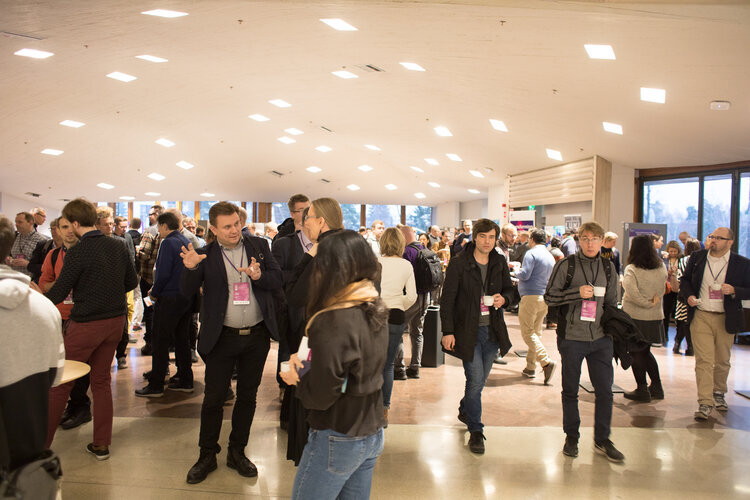
FCAI’s third annual AI Day organized on November 26 attracted hundreds of participants to discuss and hear about the newest trends in AI research.
Similar to the previous years, AI Day 2019 took place at Aalto University Campus in Otaniemi, Espoo. The event included two keynote sessions with eleven talks in total, over 90 poster and demo presentations. The opening event of ‘Connecting the Dots’ AI exhibition by FCAI and Aalto Digi Platform provided a festive way to close the day.
For more information and pictures from AI Day 2019, please see the article on FCAI’s website.
Finnish Flagships join forces for next generation networks
Experts of two Academy of Finland Flagships – the Finnish Center for Artificial Intelligence (FCAI) and 6G Flagship – are joining forces to harness the synergy between edge computing and Artificial Intelligence (AI), which are revolutionizing communication networks and becoming key components of next generation networks.
6G Flagship aims at developing 6G technologies that will bring to life the data-driven and hyper-connected future society while the mission of FCAI is to create real AI for real people in the real world – new type of AI that is able to operate with humans in the complex world.
Professor Sasu Tarkoma from the University of Helsinki, one of the organizations behind FCAI, has high expectations for the joint research approach.
“Edge computing provides a distributed platform, in which smart localized software meets advanced machine learning and AI, and privacy enhanced technologies,” Tarkoma says. “All this results in new applications and services, such as AR/VR applications, that react in real-time and can achieve a high level of privacy.”
The future internet, 5G and 6G networks, will be in operation in the 2020s and 2030s. In these networks, it will be crucial to optimize the local computational solutions to guarantee real-time connectivity and support the massive increase of data.
Computational solutions for future internet will improve radically with edge computing as devices in smart homes and vehicles, and even personal devices such as smartphones, participate in computation together with the network infrastructure. The result will be improved internet experience for users due to reduced delay, i.e. latency, among other factors. AI, on the other hand, empowers algorithms that are more effective. They enable novel applications in, for example, health care, smart cities, logistics, and transportation.
“There are a lot of globally important research questions and novel innovation and business opportunities, too,” says Dr. Ella Peltonen from 6G Flagship and the University of Oulu. “In the beginning, we focus especially on safer driving and smart traffic systems assisting the drivers, smart campus and endorsing learning in smart spaces, and in the future, smart hospitals and healthcare applications.”
HIIT celebrated its 20th anniversary
HIIT was founded in 1999 to enhance the quality, visibility and impact of Finnish research on information technology. The 20th anniversary gave an opportunity to reflect on the role that HIIT has played at various levels.
The reflections started from the big picture. Collaboration between the two universities, multidisciplinary research, and the need for effective links between the universities and the IT industry were among the themes that were brought up by the rectors. The past directors of HIIT and the current director Petri Myllymäki continued with their more personal recollections of the journey.
The anniversary of HIIT was last celebrated 10 years ago, and although a lot has happened, many of the same people are still around. In the 10th anniversary, a sample of the research done in HIIT was presented by Antti Oulasvirta, Sasu Tarkoma, Teemu Roos and Niina Haiminen. These same people were available this time also, and like 10 years ago, Patrik Floréen served as the master of the ceremonies.
For more highlights from HIIT’s 20th anniversary, please see the article published by Aalto University and the University of Helsinki.

Computer vision identifies ripe fruit and counterfeit drugs
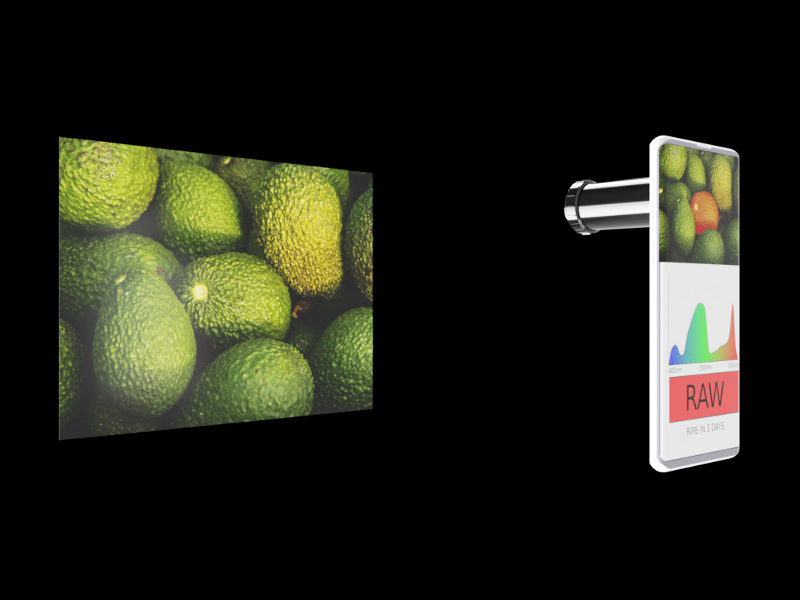
When would this avocado be suitably ripe for making guacamole? Is the drug I bought on my travels to far-off places the real thing or a fake? How big an apple crop are we getting this year?
Soon, answers to questions like these will be easily obtained, as computer vision technology developed by researchers will be made available to consumers at a reasonable price. Mikko Toivonen and Chang Rajani, doctoral students in computer science at the University of Helsinki, together with Assistant Professor Arto Klami, have designed algorithms that can convert photos taken with a phone into extremely accurate hyperspectral images.
Hyperspectral images interpret the wavelengths of light more accurately than regular photos, revealing things unseen to the naked eye in the object photographed. However, the devices currently available are specialist equipment, with prices starting from several thousand euros. The less expensive technology developed by the University of Helsinki researchers could bring the solution to regular consumers.
The high cost of previous devices is partly because they produce hyperspectral images independently from start to finish. In the researchers’ version, images are converted from regular photographs taken with a smartphone equipped with a peripheral device, and the heavy lifting, or developing the hyperspectral images, is carried out by computer vision algorithms in a cloud service.
The invention is patent pending and next year begins the search for investors. For more information, please see the article on the University of Helsinki website and visit the University of Helsinki / Helsinki Innovation Services (HIS) stand at Slush in Helsinki on 21-22 November 2019.
Expertise from FCAI selected to the Finnish government’s Research and Innovation Council
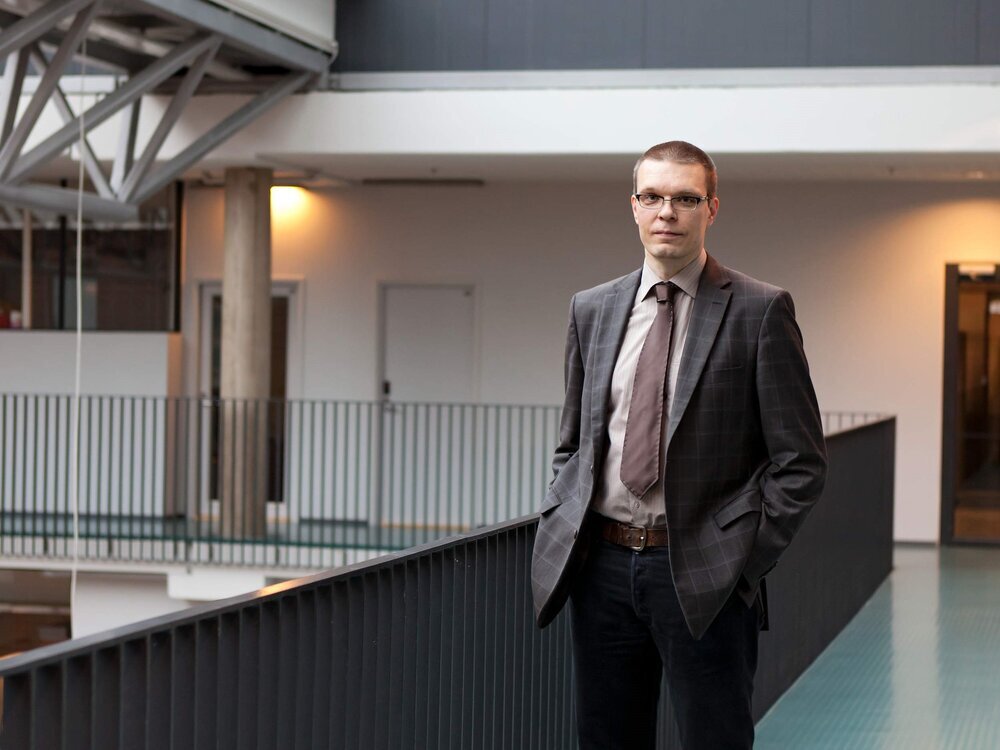
Samuel Kaski, Director of Finnish Centre for Artificial Intelligence (FCAI) and Professor at Aalto University, and Antti Vasara, CEO of VTT Finland, have been appointed to the Finnish Government’s Research and Innovation Council. The new council was elected on October 10.
FCAI is pleased that Finland sees the importance of artificial intelligence and the Finnish government displays trust in knowledge and research in general.
The Research and Innovation Council is an advisory body chaired by Prime Minister Antti Rinne that addresses issues relating to the development of research and innovation policy that supports wellbeing, growth, and competitiveness.
The vice chairs are of the council are Hanna Kosonen, Minister of Science and Culture, and Katri Kulmuni, Minister of Economic Affairs. The other three governmental members are Li Andersson, Minister of Education; Anna-Maja Henriksson, Minister of Justice; and Maria Ohisalo, Minister of the Interior.
The other members of the new council are Heidi Fagerholm (Head of Early Research and Business Development at Merck KGaA), Peppi Karppinen (Dean at the University of Oulu), Ilkka Kivimäki (Partner at Maki.vc), Petra Lundström (Director at Fortum), and Vesa Taatila (Rector and CEO at the Turku University of Applied Sciences).
The Finnish “Elements of AI” online course trains employees of the European Union
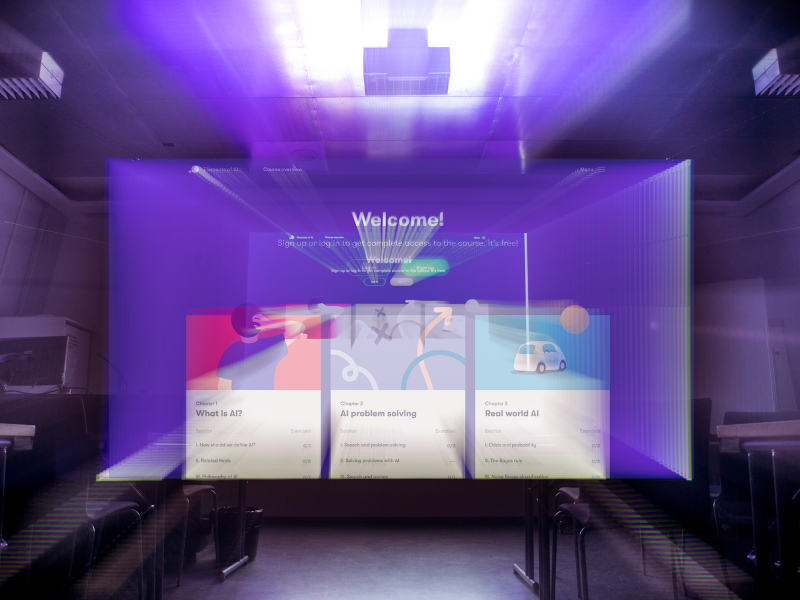
The extremely successful online course Elements of AI has been selected to be part of the voluntary continuing education for officials working for the European Union.
The kick-off of the initiative organised on 18 September.
Artificial intelligence has the potential to provide solutions to a range of societal challenges, which is why its utilisation is an important focus area for the EU. Staff training is part of promoting the bloc’s AI strategy.
In Finland, a number of government ministries, the Tax Administration and more than 250 other organisations and companies have offered the course to their staff.
Smartphone typing speeds catching up with keyboards
A study of over 37,000 users shows that the ‘typing gap’, the difference typing speeds between mobile devices and physical keyboards is decreasing, and 10–19-year olds can type about ten words-per-minute faster than their parents’ generation.
The largest experiment to date on mobile typing sheds new light on average performance of touchscreen typing and factors impacting the text input speed. Researchers from Finnish Centre for Artificial Intelligence (FCAI), University of Cambridge and ETH Zürich analysed the typing speed of tens of thousands of users on both phones and computers. Their main finding is that typing speeds on smartphones are now catching up with physical keyboards.
“We were amazed to see that users typing with two thumbs achieved 38 words per minute on average, which is only about 25% slower than the typing speeds we observed in a similar large-scale study of physical keyboards,” said Anna Feit, a researcher at ETH Zürich and one of the co-authors.
“While one can type much faster on a physical keyboard, up to 100 wpm, the proportion of people who actually reach that is decreasing. Most people achieve between 35-65 WPM.”
The authors call the difference between typing on a keyboard and a smartphone “the typing gap” and predict that as people get less skilled with physical keyboards, and smart methods for keyboards improve further (such as auto-correction and touch models), the gap may be closed at some point. The fastest speed the researchers saw on a touchscreen was a user who managed the remarkable speed of 85 words per minute.
The best predictor of performance is whether you use one finger or two thumbs to type. Over 74% of people type with two thumbs, and the speed increase it offers is very large. The study also found that enabling the auto-correct of words offers a clear benefit, whereas word prediction, or manually choosing word suggestions, does not.
The study also exposed a strong generation effect. Young people, between 10 and 19 years of age are about 10 wpm faster than people in their 40s. Antti Oulasvirta, professor at Aalto University and researcher at FCAI: “We are seeing a young generation that has always used touchscreen devices, and the difference to older generations that may have used devices longer, but different types, is staggering.”
The authors found no benefit from formal training on the ten-finger typing system on physical keyboards. Oulasvirta continues: “This is a type of motor skill that people learn on their own with no formal training, which is very unlike typing on physical keyboards. It is an intriguing question what could be achieved with a careful training program for touchscreens.”

Ten research papers from FCAI accepted to the prestigious NeurIPS conference
Research conducted at the Finnish Centre for Artificial Intelligence FCAI is well presented at this year’s NeurIPS conference. In total, the conference has accepted ten submissions from either Aalto University or the University of Helsinki. NeurIPS is the largest and most prestigious conference on machine learning, and is held this year in Vancouver, Canada.
For more information, please see the article on the FCAI website.
FCAI receives the Aalto Research Impact Award 2019
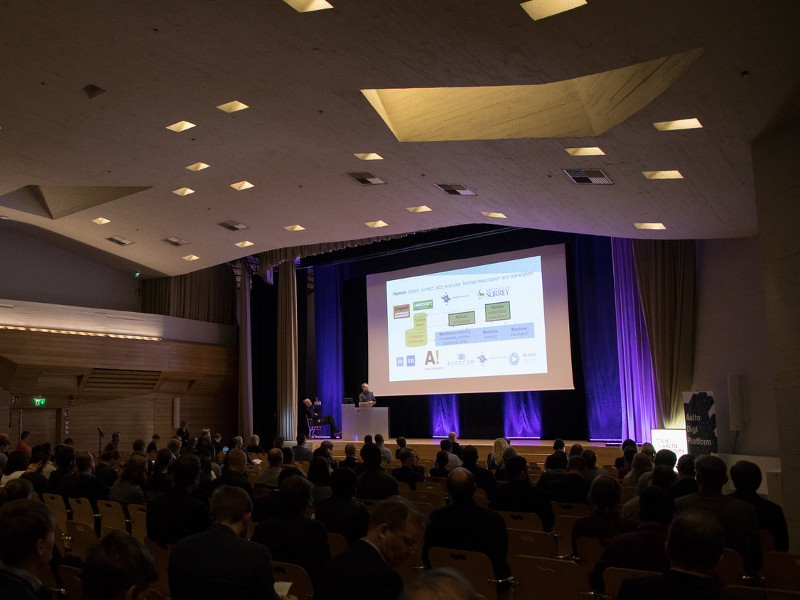
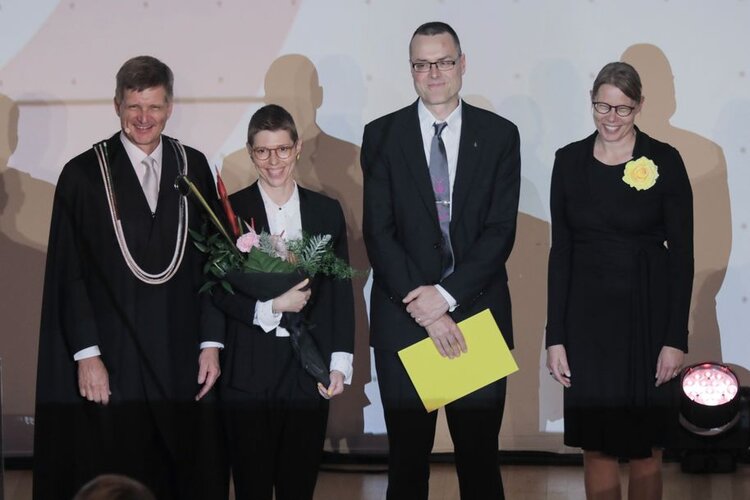
Aalto University recognized FCAI at the Opening Ceremony of the Academic Year by granting the Aalto Research Impact Award 2019 to the FCAI team. Aalto Impact awards recognize outstanding impact and they are given for the excellent work done during the previous academic year.
FCAI is a joint effort of an active community. We appreciate that Aalto University recognised the achievements of the big team who has started the initiative. FCAI is still expanding and developing new ways to contribute to the research and impact and we are hoping to see even more talents joining FCAI in future.
In the same ceremony, FCAI Manager Outi Kivekäs was granted the Aalto Success Enabler Award 2019 for the work done with her earlier team concerning the Academy of Finland profiling funding applications.
Read more in the Aalto University news:
https://www.aalto.fi/en/news/eight-teams-awarded-at-the-opening-ceremony
AIX Forum brings AI developers and users together
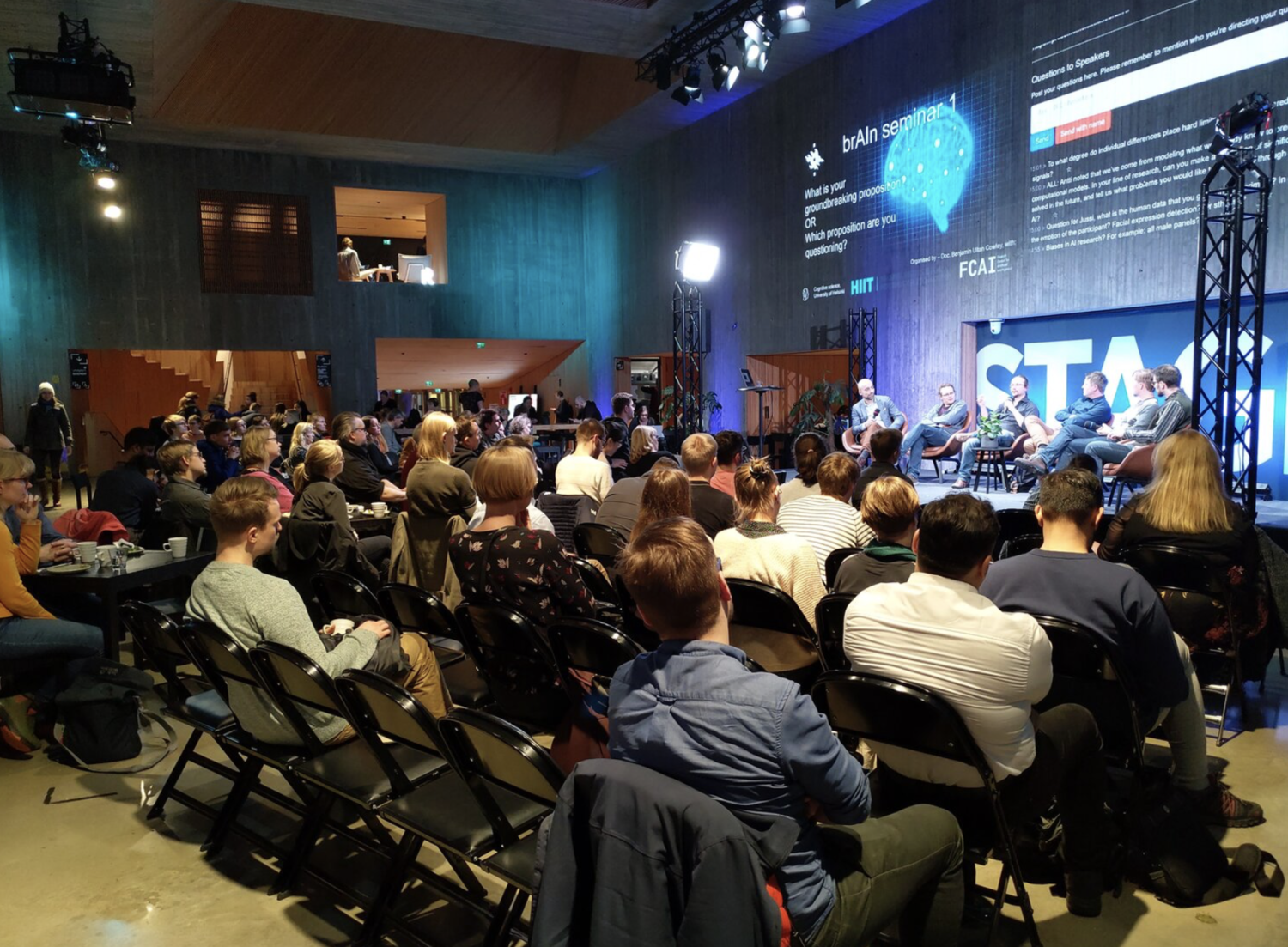
In autumn 2019, FCAI launched AIX Forum, a series of events aiming to find novel opportunities for high-impact AI applications in Finland and provide a meeting place for AI researchers, researchers of other disciplines, companies, and public organisations. X can refer to any problem domain where AI could provide a solution and it may be related to an industrial or societal sector or a scientific field.
“AI applications challenge common practices in many fields, and the pace of change is fast. At AIX Forum events, researchers who focus on AI or other topics, companies and public sector representatives can find new ways to make use of AI,” says Petri Myllymäki, Vice Director of FCAI and Professor of Artificial Intelligence and Machine Learning at the University of Helsinki.
“So far we have already addressed themes like traffic, public services, cancer research, economics, health and maritime,” Professor Myllymäki says.
Most AIX Forum events consist of three parts. The events typically start with brief pitch talks in which experts from different fields present a problem that could be solved by using AI. The talks are followed by panel discussions in which AI researchers and developers, together with the speakers, seek solutions for the presented problems. At the end of each event, there is time for networking.
For upcoming AIX Forum events, please see the home page of the series on FCAI’s website.
Matti Järvisalo receives the 2019 IJCAI-JAIR Best Paper Prize
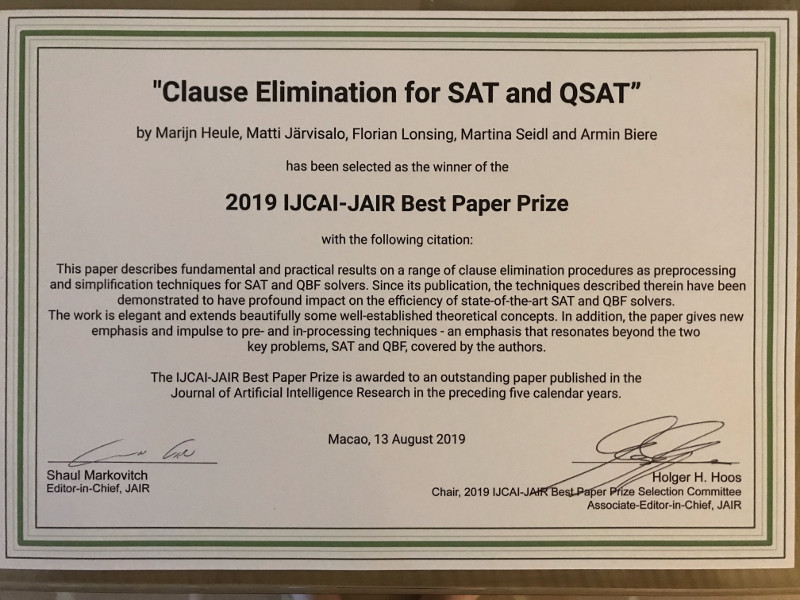
The 2019 IJCAI-JAIR Best Paper Prize awarded article, co-authored by Matti Järvisalo, was selected from more than 250 articles published in the preceding five calendar years in the leading AI journal Journal of Artificial Intelligence Research.
Marijn Heule (now at Carnegie Mellon University, USA), Matti Järvisalo (Constraint Reasoning and Optimization Group at University of Helsinki, Finland), Florian Lonsing (now at Stanford University, USA), Martina Seidl and Armin Biere (Johannes Kepler University, Austria) have been awarded the 2019 IJCAI-JAIR Best Paper Prize for their paper “Clause Elimination for SAT and QSAT”, which appeared in volume 53 (2015) of Journal of Artificial Intelligence Research, a leading journal in the general field of AI research.
The paper was chosen as the recipient of this prestigious award from the set of all papers published at JAIR in the preceding five calendar years. The award was announced during the opening ceremony of the leading AI conference IJCAI 2019, 28th International Joint Conference on Artificial Intelligence on August 13 in Macau, China. An invited award talk was delivered on the same day at IJCAI 2019 by Järvisalo. “In his 2019 IJCAI-JAIR Best Paper Prize talk, Matti Järvisalo nicely emphasises the enormous impact of automated reasoning in AI and beyond … and shines a bright light on one of AI’s largest intellectual and commercial successes to date.”, commented Holger Hoos, Chair of the 2019 IJCAI-JAIR Best Paper Prize Selection Committee.
As noted in the award citation, the paper describes fundamental and practical results on a range of clause elimination procedures as preprocessing and simplification techniques for SAT and QBF solvers. Since its publication, the techniques described therein have been demonstrated to have profound impact on the efficiency of state-of-the-art SAT and QBF solvers. The work is elegant and extends beautifully some well-established theoretical concepts. In addition, the paper gives new emphasis and impulse to pre- and in-processing techniques – an emphasis that resonates beyond the two key problems, SAT and QBF, covered by the authors.
Further information:
Deep learning model developed by Finnish AI researchers detects diabetic eye diseases accurately
Finnish AI researchers have developed a deep learning system that shows great potential in detecting diabetic eye diseases, which could facilitate doctors’ work and decrease healthcare expenses.
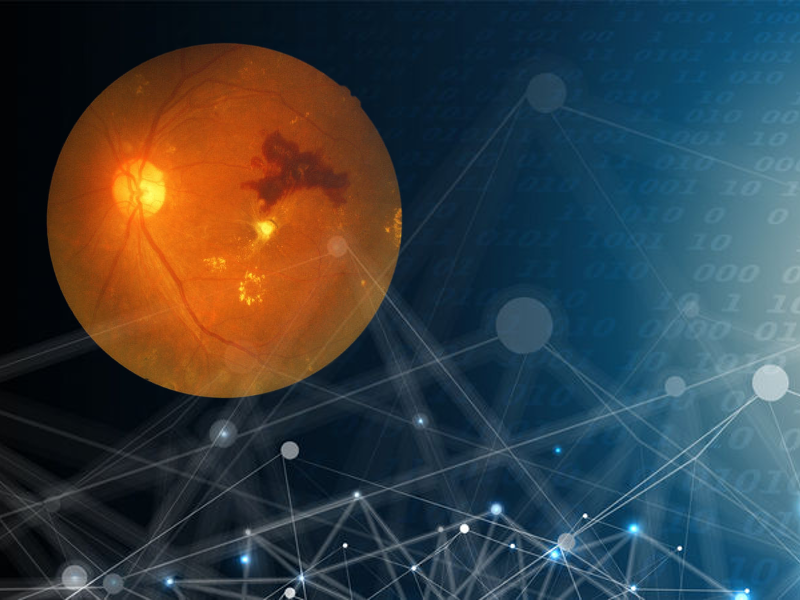
According to the research findings published in Nature Scientific Reports, the deep learning model detects the severity grade of diabetic retinopathy and macular edema accurately. Diabetic retinopathy is one of the most common comorbidities of diabetes that, if untreated, may lead to severe vision loss. Macular edema refers to swelling under a specific part of the retina caused by diabetic retinopathy.
The deep learning model identified referable diabetic retinopathy comparably or better than presented in previous studies, although only a very small data set was used for its training. The model turned out to be more accurate in identifying diseases when the training images of patients’ fundus were of high quality and resolution.
Results suggest that such deep learning system could increase the cost-effectiveness of screening and diagnosis and that the system could be applied to clinical examinations requiring finer grading.
Currently, retinal imaging is the most widely used method for screening and detecting retinopathy, and medical experts evaluate the severity and the degree of retinopathy in people with diabetes based on the fundus or retinal images of the patient’s eyes.
As diabetes is a globally prevalent disease and the number of patients with diabetes is rapidly increasing, also the number of retinal images will increase, which in turn introduces a large labor-intensive burden on the medical experts as well as cost to the healthcare. An automated system that would either assist medical experts or work as a full diagnostic tool could alleviate the situation.
The research group consisted of researchers from Aalto University Department of Computer Science, Digifundus Ltd (a Finnish provider of diabetic retinopathy screening and monitoring services), and Central Finland Central Hospital.
FCAI and Aalto EE have joined forces for programs around AI
Aalto University Executive Education (Aalto EE) and the Finnish Center of Artificial Intelligence FCAI are cooperating in AI training programs that are designed for executives, managers, and experts from different organizations. The programs have proven to be an impactful way of learning while working. The first deliveries of the programs have received excellent feedback and the next programs are coming up in the fall.
An intensive two-day program “Tekoäly liiketoiminnassa – teknologiasta strategiaan” provides leaders with a practical and comprehensive overview of artificial intelligence, data, and emerging business models and their impact on strategy, operations, and leadership. Taught by leading researchers in the field, the program focuses on issues such as the applications of artificial intelligence, the prerequisites for its implementation, and the strengths of people and AI. The program is held in Finnish.
The Diploma in Artificial Intelligence gives you an in-depth understanding of the latest AI technologies and methods and how to apply them. The program is taught by experts from leading research organizations and includes keynotes from leading companies in industry. It is a joint program from Aalto PRO, University of Helsinki HY+ and the Finnish Center for Artificial Intelligence FCAI.
Finland offers AI training to inmates
All inmates in Finnish prisons have now access to the Elements of AI online course, a widely popular introductory course on artificial intelligence.
“It doesn’t matter if you’re behind the bars, AI is affecting everyone’s life. There are also important ethical and political questions concerning the use of AI. What we are trying to do is support the public discourse by making the topic easier to understand by non-experts,” says Associate Professor Teemu Roos, the lead instructor of the course.
For more information, please see the article on FCAI’s website.
City of Helsinki becomes a partner of FCAI
The City of Helsinki has announced that it will become a partner of the Finnish Center for Artificial Intelligence (FCAI).
By joining FCAI, Helsinki wants to support its goals in terms of collaboration with universities, competitiveness, and digitalisation.
In particular, this decision aids collaboration between Helsinki, the University of Helsinki, and Aalto University. It also supports actions that help to attract more innovations and investments to the Finnish capital region.
Espoo, the neighbouring city of Helsinki, is already one of the partners of FCAI.
More information on the City of Helsinki website (in Finnish)
FCAI brings its expertise to the development project of Finnish language resources
FCAI partner Vake Oy – a state-owned investment and development company in Finland – launches its development program for Finnish artificial intelligence in May 2019. The first project aims to create Finnish language resources (application libraries, language models, and training materials) needed by developers of artificial intelligence devices and software requiring man-machine interaction in Finnish. The final goal is to develop components enabling the use of Finnish in artificial intelligence alongside the major languages of the world. The work begins with a preliminary study conducted by Vake Oy, the Department of Digital Humanities at the University of Helsinki, the FIN-CLARIN consortium, the Aalto University, Business Finland, and the Technology Industries of Finland to establish development priorities. FCAI contributes by bringing strong research expertise on new machine learning methods for language technologies.
Sound is a significant future interface. More than half of Google searches are estimated to be voice-controlled in 2020. The market research agency Canalys has estimated that there will be nearly 100 million smart speakers in households this year. International giants like Amazon, Apple and Google are selling millions of smart speakers a year, and the Russian Yandex and the Chinese e-commerce company Alibaba have developed smart speakers for their own language areas.
“In the market for voice-controlled devices and applications, developers naturally focus on the major languages to maximize the market potential of services. The ambitions of the current Finnish players are not limited to product development for our own small linguistic area, but companies need initial testing and references from the domestic market to succeed. Consumers will be excluded from these fast-growing services, unless we invest in Finnish resources,” says Development Director Tuomas Teuri from Vake.
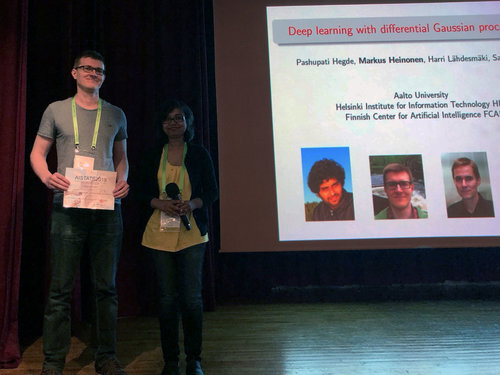
FCAI team receives Notable Paper Award in AISTATS 2019
A paper by an FCAI team, “Deep learning with differential Gaussian process flows” was awarded the 2019 Notable Paper Award in the 2019 AI & Statistics conference as one of only three papers to be awarded the honour out of a field of over one thousand submissions. The prize winning paper was written by Pashupati Hegde, Markus Heinonen, Harri Lähdesmäki, and Samuel Kaski and came out of a collaboration between the research groups of Professor Lähdesmäki and Professor Kaski.
In deep learning, hundreds of successive computations are combined together to learn very complex tasks. This how computers and phones now recognise faces in images or translate languages. In the new paper by the FCAI team, combining all the computations together is replaced with a continuous transforming flow of inputs, which is used to perform the learning task in way that’s easier to interpret. The work also presents a new connection between deep learning and a group of mathematical models called “stochastic dynamical systems”. This connection means that, compared to common neural networks, the new method can understand how much uncertainty there is in the prediction process. This understanding of uncertainty means the new method excels at learning models where there are smaller amounts of data – potentially useful for future applications like personalised medicine or drug design.
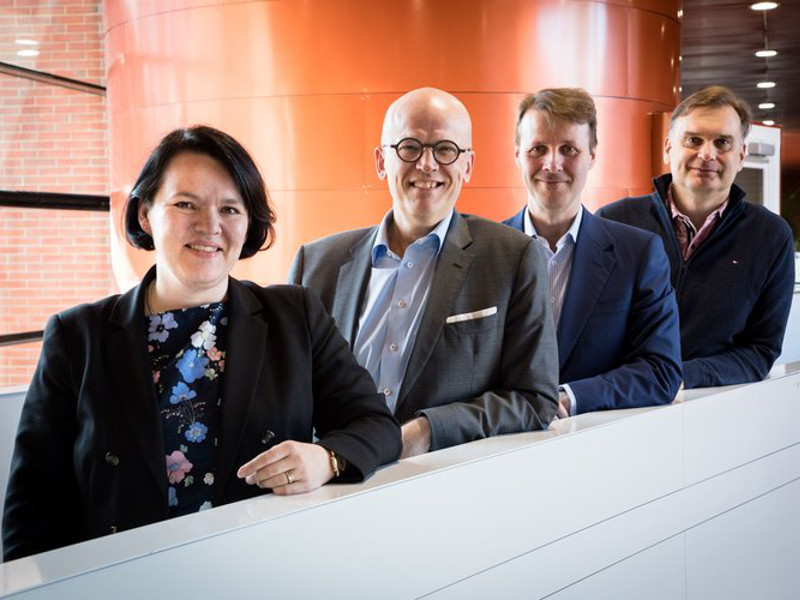
Prestigious Board of Advisors to support the impact of FCAI
The Finnish Center for Artificial Intelligence FCAI has named an Impact Advisory Board with a broad spectrum of expertise.
The Impact Advisory Board (IAB) for the Finnish Center for Artificial Intelligence, had its kick-off meeting on April 15, 2019. Antti Vasara (CEO, VTT Oy) was selected to chair the board. The other members include Risto Siilasmaa (Chairman of the Board of Directors, Nokia and F-Secure), Academician Ilkka Niiniluoto, Ilona Lundström (Director General at the Ministry of Economic Affairs and Employment), Henry Tirri (CTO, InterDigital Inc.), and Ilkka Kivimäki (Venture capitalist, Maki.vc).
IAB supports FCAI to create impact by giving new viewpoints on the research agenda and by advising on impact creation on business and society.
”FCAI is totally unique in connecting research excellence in artificial intelligence to applying the results in renewing the society and industries”, says Antti Vasara. “Artificial intelligence offers unlimited opportunities, and the versatile experience of the IAB members helps FCAI to direct these opportunities to build a better future.”
Changing how a country types
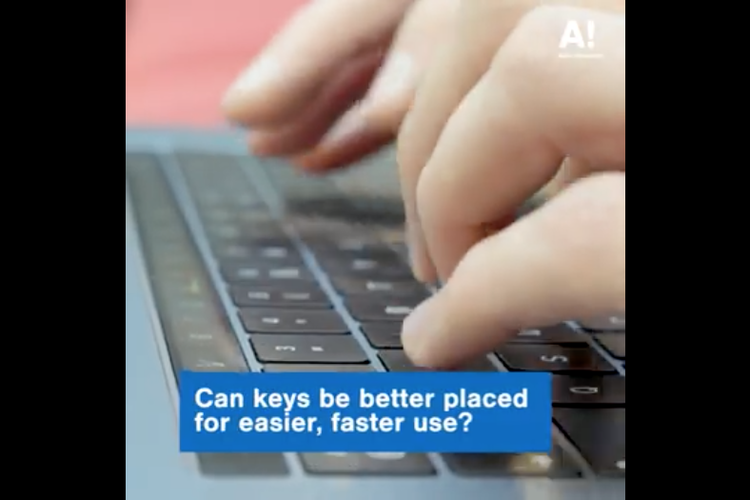
France adopts new keyboard standard created with state-of-the-art algorithm.
Keyboards touch our everyday lives yet, despite the well-known drawbacks of current layouts used across the globe, the position of characters has largely remained the same. Researchers at Aalto University, as part of an international collaboration, have now used computational methods to place keyboard characters for easier, more comfortable typing. The result is a new keyboard standard created with an advanced algorithm, introduced by France on 2 April 2019.
To inform the design, researchers built statistical models of character use in modern French, drawing on newspaper articles, French Wikipedia, legal texts, as well as emails, social media, and programming code. In contrast to previous work that assumes people use their fingers in certain ways, they gathered the key presses of over 900 people in a large-scale crowdsourcing study to see what counted as an ‘easy’ key press. In addition, they included state-of-the-art findings from ergonomics literature.
Most countries use the standard QWERTY keyboard—originally designed for the English language—despite frequently used accented characters or different styles of punctuation. The research team hopes that the model produced for France could be used by other groups in the future.
FCAI Community is open to researchers interested in developing or applying AI
Finnish Center for Artificial Intelligence FCAI is one of the six research flagships in Finland. It is both a research organization having a sharp research and impact agenda, and an open ecosystem of researchers, companies, and public organizations gathered around a common goal. All researchers based in Aalto University, University of Helsinki or VTT are welcome to join the community.
The ambitious mission of FCAI is to create a new type of AI that can operate with humans in the complex world and help Finnish industry and society to realize its full AI potential. This requires expertise from a number of fields, and when successful, will have substantial effects in science, economy, education, and the rest of the society, across a number of fields and applications. This is an opportunity a large set of top-level experts does not want to miss.
FCAI Community is for all researchers contributing to AI research or using its results. Join by filling in a light application form.
FCAI takes the lead in developing collaboration with The Alan Turing Institute
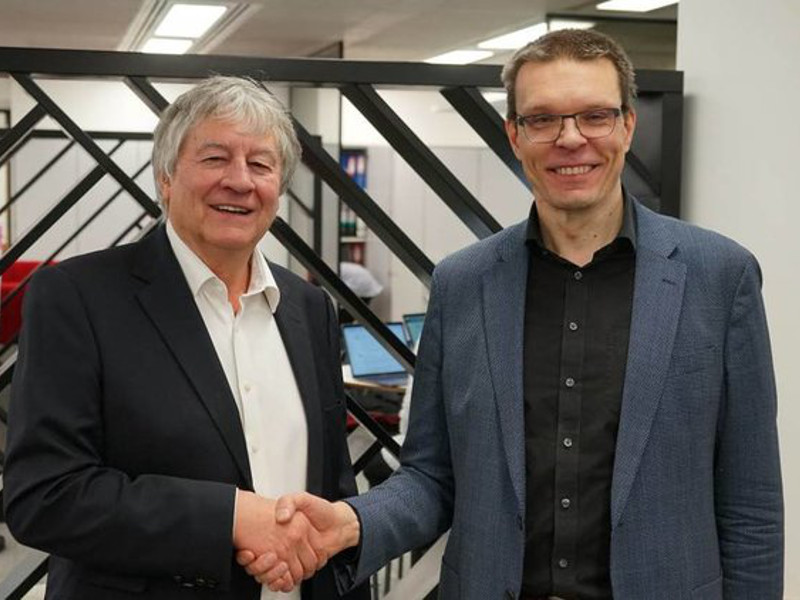
The recently signed Memorandum of Understanding enables FCAI to take concrete steps towards shared research and translation projects with The Alan Turing Institute. The collaboration centres around the Turing’s data-centric engineering programme, a major research programme funded by the Lloyd’s Register Foundation, and will include the development of AI methods to improve the diagnosis of Diabetic Retinopathy. The project is establishing one of the largest data collections of retinal images and optical coherence tomography (OCT) scans in the world. Diabetic retinopathy is a complication of diabetes caused by high blood sugar levels damaging the back of the eye (retina), which can cause blindness if left undiagnosed and untreated.
Adrian Smith, Institute Director, The Alan Turing Institute, said: “This is a significant international collaboration and I am delighted the Turing is now formally linked to one of the most dynamic research institutions in Europe. Together, we share a common goal of shaping the world we live in for the better and this collaboration will enable us to combine world-class expertise and apply data science and AI approaches to tackle real world problems.”
Prof M. A. Girolami the Turing’s Director of Data Centric Engineering programme (and Sir Kirby Laing Professor of Civil Engineering at the University of Cambridge and the Lloyds Register Foundation-Royal Academy of Engineering Research Chair in Data Centric Engineering) has been appointed as Adjunct Professor of Machine Learning at Aalto University, which will help develop the partnership.
In addition, Professor Kimmo Kaski (former Academy Professor and Dean of the School of Science at Aalto University) is a Turing Rutherford Fellow and will continue to work as the Turing-FCAI Liaison Director. Professor Kimmo Kaski said: “I am excited about this strategic partnership between FCAI and The Alan Turing Institute – the world’s foremost data science and AI research set-up, as it gives us the opportunity to jointly further Turing’s unique and world-changing legacy in finding solutions to challenging problems around us by applying data science and AI to the most valuable resource, data, for common good and better services to us all.”
A number of other projects are currently being developed between FCAI and the Turing. Professor Samuel Kaski, director of FCAI said “We are looking forward to continuing the already existing collaboration with a number of Turing partners, and working on the new initiatives we identified based on our complementary strengths.”
Computational analysis of large bacterial populations is paving the way for new vaccines
Streptococcus pyogenes, also known as group A streptococcus, is estimated to cause annually 700 million human infections worldwide. Most of these are inflammations of the throat, but the bacterium also causes more serious infections with high mortality rates. Despite a century of intensive effort, no effective vaccine has been discovered so far.
An international research team recently conducted the first population-based and genome-wide bacterial transcriptomics study, combined with dense longitudinal genome data and virulome characterization using an animal model. The combination of multiple data modalities with advanced computational methods unraveled changes in the DNA which lead the bacterium to have heightened virulence. The FCAI research group led by professor Jukka Corander had a central role in the computational parts of the project, where sequence mining algorithms and artificial intelligence were used to link complex events in the target pathogen population. The study is expected to aid in the development of novel bacterial vaccines, and provide a model for deciphering the evolution of multiple other human pathogens also.
An article on the study has been published in Nature Genetics.

Working towards a more diverse research community
The second annual Women in Data Science (WiDS) Helsinki conference was organised in Biomedicum Helsinki on the International Women’s Day, Friday, March 8. The conference gathered together researchers, students and representatives from the private and the public sector to learn about and discuss the latest data science and artificial intelligence and applications in a wide set of domains.
Mehreen Ali, the local WiDS Ambassador in Finland and a doctoral student in the Institute for Molecular Medicine Finland (FIMM), University of Helsinki, explains that the three main goals of the event are to inspire, educate, and support the female researchers in the field. The WiDS Helsinki conference is part of the Global Women in Data Science conference network. The first WiDS conference was organised at Stanford University in 2015, and last year the conference had already spread to over 50 countries as the nearly 200 regional events organised in 2018 reached over 100 000 participants worldwide.
HIIT and the host universities are committed to improving the diversity and gender-balance of the research community in data science and artificial intelligence, and are proud to be among the supporters of WiDS Helsinki 2019.
MIT Professor Tommi Jaakkola shared his wisdom on applying AI in other fields
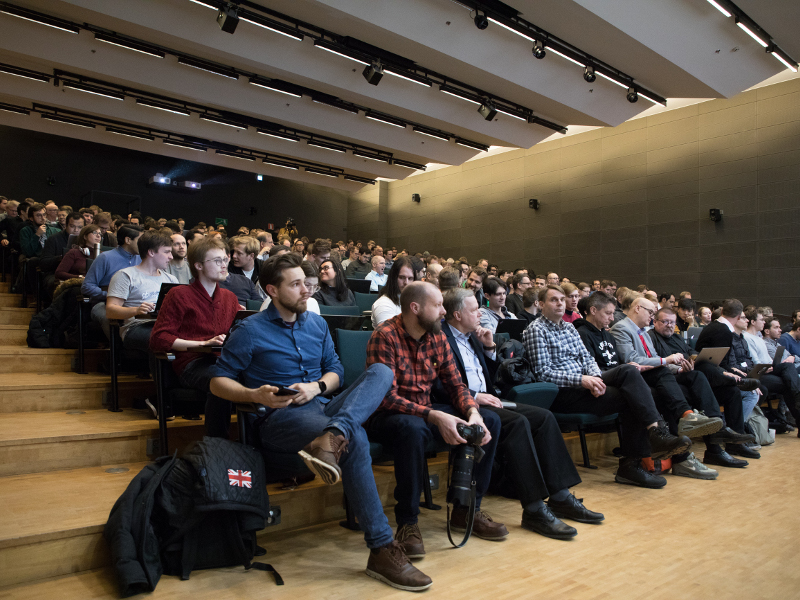
The Helsinki Distinguished Lecture Series on Future Information Technology got an excellent start for 2019, when the large auditorium of the Otaniemi TUAS building was packed full for Tommi Jaakkola‘s talk. He is a world class researcher and an acclaimed teacher whose work focuses on both foundational theory and applications of machine learning. He received his Master’s degree from Helsinki University of Technology, did his PhD at MIT, and joined the MIT faculty in 1998.
The talk, titled “Modeling with Machine Learning: Challenges and Some Solutions”, consisted of two parts. The first part illustrated how AI can be used as a tool to accelerate and transform other areas of science and engineering. By enabling complex inferences to be made from data, machine learning extends the reach of modeling to phenomena that are not well-understood yet. The second part of the talk gave an overview of efforts to make machine learning models more interpretable. While major advances have been made in achieving good performance in complex tasks, understanding how the models work is often difficult even for an expert. These two challenges, construction of sophisticated models and improving interpretability, are typically seen as two different subfields of machine learning research, but one of the main conclusions of the talk was that significant synergy is emerging.
To demonstrate how AI can accelerate progress in other areas, Professor Jaakkola presented some of the work he and his collaborators have done in chemistry. Vast amounts of underused information exist in databases, literature, and researchers’ notebooks. In an attempt to accelerate drug design, they have created models that predict the properties of a molecule on the basis its structure. They have also worked on predicting the major products of chemical reactions, achieving a level of performance on par with human experts.
Their approach to improving interpretability is based on the observation that although a full understanding of a complex model cannot be simple, there are ways to facilitate “local” understanding of how individual inputs are processed. This can be done even with existing models by repeatedly modifying the input and observing the effect on the output. When creating new models, constraints can be applied to internal structures to make them locally interpretable.
One of the key challenges in machine learning is to get beyond the training data with models that capture fundamental aspects of the domain. In drug design, for example, computational exploration of new chemical spaces would be even more valuable than working within the boundaries of the chemical diversity present in the data. Jaakkola proposes incorporating more domain knowledge, such as integrated physics calculations, in machine learning methods to achieve this kind of deep generalizations.
The importance of domain knowledge has implications on how research and education in AI should be organized. Jaakkola stated that taking AI successfully into other fields can only be done by “teams of three”: an AI expert, a domain expert, and a person knowledgeable about both. Here in Finland, the research agenda of FCAI is based on similar ideas of cross-disciplinary collaboration.
Applying AI Across Fields also means that a broader variety of people should have access to relevant education. At MIT, Professor Jaakkola is teaching a course titled Introduction to Machine Learning, which has become popular among students in other disciplines besides computer science. Alexander Jung has had a lot of success with a similar course at Aalto University, and Elements of AI, led by Teemu Roos, targets an even broader audience with the objective of educating 1% of the Finnish population in the basics of AI.
A video recording of Tommi Jaakola’s talk is available and highly recommended to everyone.
New machine learning method enables deeper understanding of pathogenic bacteria
A research team led by professor Jukka Corander has created a new machine learning method for the analysis of bacterial genomes. Thanks to its computational efficiency, the new method can handle an order of magnitude larger data sets than the previous methods, and is applicable at the level of pangenomes of most pathogenic bacteria. The current focus of the team is on the pneumococcus and the meningococcus, which are major causes of life-threatening diseases such as pneumonia, sepsis and meningitis, and frequently cause also other milder diseases. Their results display important findings on the evolution of both virulence and antibiotic resistance in populations of these bacteria. The research is part of professor Corander’s ERC AdG project which develops scalable inference methods for infectious disease epidemiology.
A manuscript describing the method and the first results is available at bioRxiv.
Aurora AI plans to revolutionize public services
As a part of Finland’s venture to become a forerunner in the application of AI technologies, the Ministry of Finance has been spearheading a public network of AI infrastructure called AuroraAI. Kicked off in 2018, the project will enable human centered and proactive public services with the help of modern AI technologies.
FCAI Society is helping the project by providing a critical eye to the ethical dimensions of the venture. In collaboration with the Ethics sub-group of Finland’s AI Program, the interdisciplinary group of experts at FCAI Society will provide ethical sparring to identify risks and rewards in the project, as well as to operationalize the high level societal values the AuroraAI project is committed to.
The application of AI technologies provides the possibility for individualized and human centered services, which help citizens in the important turning points in their lives. But to reap these benefits, technologies must be implemented in a responsible and value-driven manner. That is why societal impact and ethical concerns must be evaluated at the get-go, not as an afterthought. This perspective is also present in the European High Level Expert group’s draft report on principles for trustworthy AI.
To learn more about AuroraAI and how they are implementing European principles for ethical AI, please see their YouTube channel.

FCAI gets significant boost from the Academy of Finland
The Finnish Center for Artificial Intelligence has been granted over €8 million in funding from the flagship programme of the Academy of Finland. Flagship status is only granted to competence clusters of high quality and high societal impact. The 4-year funding term begins in January 2019 with a possible extension of 4 years. The total budget of FCAI is 250 M€ in the next 8 years.
“The flagship status is a signal from society that artificial intelligence research is considered important,” says Samuel Kaski, director of FCAI and professor of computer science at Aalto University.
With the new funding, artificial intelligence expertise scattered around Finland can now be efficiently brought together. According to Kaski, flagship status also makes it possible to assemble scholars from various disciplines to carry out research based on a shared agenda. This way, FCAI is able to make artificial intelligence benefit other fields of science as well as society, not to mention businesses.
“A competence cluster such as the Finnish Center for Artificial Intelligence also helps keep the best minds in the field in Finland, while attracting even more top experts and investment to the country,” says Petri Myllymäki, vice-director of FCAI and professor of artificial intelligence and machine learning at the University of Helsinki.
“We also wish to promote the establishment of new businesses and engender better products, services and practices in various sectors of industry and society, thus facilitating sustainable growth,” says Tua Huomo, executive vice-president of VTT, who is in charge of FCAI’s industry and society network.
FCAI aims to develop artificial intelligence needed in Finland that is understandable and trustworthy, works well in supporting people and utilises available data efficiently. Ethical and societal aspects of AI will also be an important part of the agenda.